How to Start a Security Guard Company: A Step-by-Step Guide
A practical, step-by-step guide to starting a security guard company — licensing, insurance, hiring, pricing, winning clients, and the systems you need to run it.
The private security industry is large, growing, and surprisingly accessible to start in — you don’t need a storefront or heavy equipment to begin. But the gap between landing your first contract and building a company that lasts comes down to two things: getting the legal foundation right, and running operations professionally from day one.
This guide walks through the full process, from licensing to your first client to the systems that keep it all running.
A note on regulations: Licensing rules vary significantly by country, state, and city. Treat the legal sections below as a checklist of what to research, not legal advice. Always confirm requirements with your local regulator.
Step 1: Research Licensing Requirements
Almost every jurisdiction regulates private security. Before anything else, find out what yours requires. Typically that includes some combination of:
- A company/agency license to operate a security business
- Individual guard licenses or registrations for everyone you employ
- A qualifying manager with industry experience or a specific certification
- Background checks and fingerprinting for owners and guards
Start with your state or national security regulator’s website. This step determines your timeline more than any other, because licenses can take weeks or months to issue.
Step 2: Choose a Business Structure and Register
Set up the legal entity for your business — in the US that’s usually an LLC or corporation, which separates your personal assets from company liability. You’ll also need to:
- Register the business name
- Obtain a tax ID (EIN in the US)
- Open a dedicated business bank account
- Set up bookkeeping from day one
Don’t skip the clean separation of personal and business finances. It matters for liability, taxes, and looking credible to clients.
Step 3: Get Insured
Security is a liability-heavy business, and clients will ask for proof of coverage before they sign. Plan for:
- General liability insurance
- Professional liability / errors and omissions
- Workers’ compensation (usually required once you have employees)
- A surety bond, which many jurisdictions and clients require
Adequate insurance isn’t just protection — it’s a prerequisite for winning most serious contracts.
Step 4: Build Your Pricing Model
Most security companies bill clients an hourly bill rate per guard, and pay guards an hourly pay rate. Your margin lives in the gap. To price correctly, account for:
- Guard wages and payroll taxes
- Insurance and bonding
- Uniforms and equipment
- Software and overhead
- Your target profit margin
A common mistake is pricing too low to win early contracts, then discovering there’s no margin left to run the business. Know your true cost per billed hour before you quote.
Step 5: Hire and Train Your Guards
Your guards are your product. Clients judge your entire company by the person standing at their site. Build a hiring process that screens for reliability and professionalism, not just availability, and invest in proper onboarding.
High turnover is the industry’s biggest operational drag, so retention should be part of your plan from the start — see our guide on reducing security guard turnover for strategies that work even with a small team.
Step 6: Win Your First Clients
Early contracts usually come from hustle, not marketing budgets:
- Network locally — property managers, construction firms, event venues, and retail centers all buy security.
- Niche down. Specializing (construction sites, residential communities, events) makes you the obvious choice for a specific buyer.
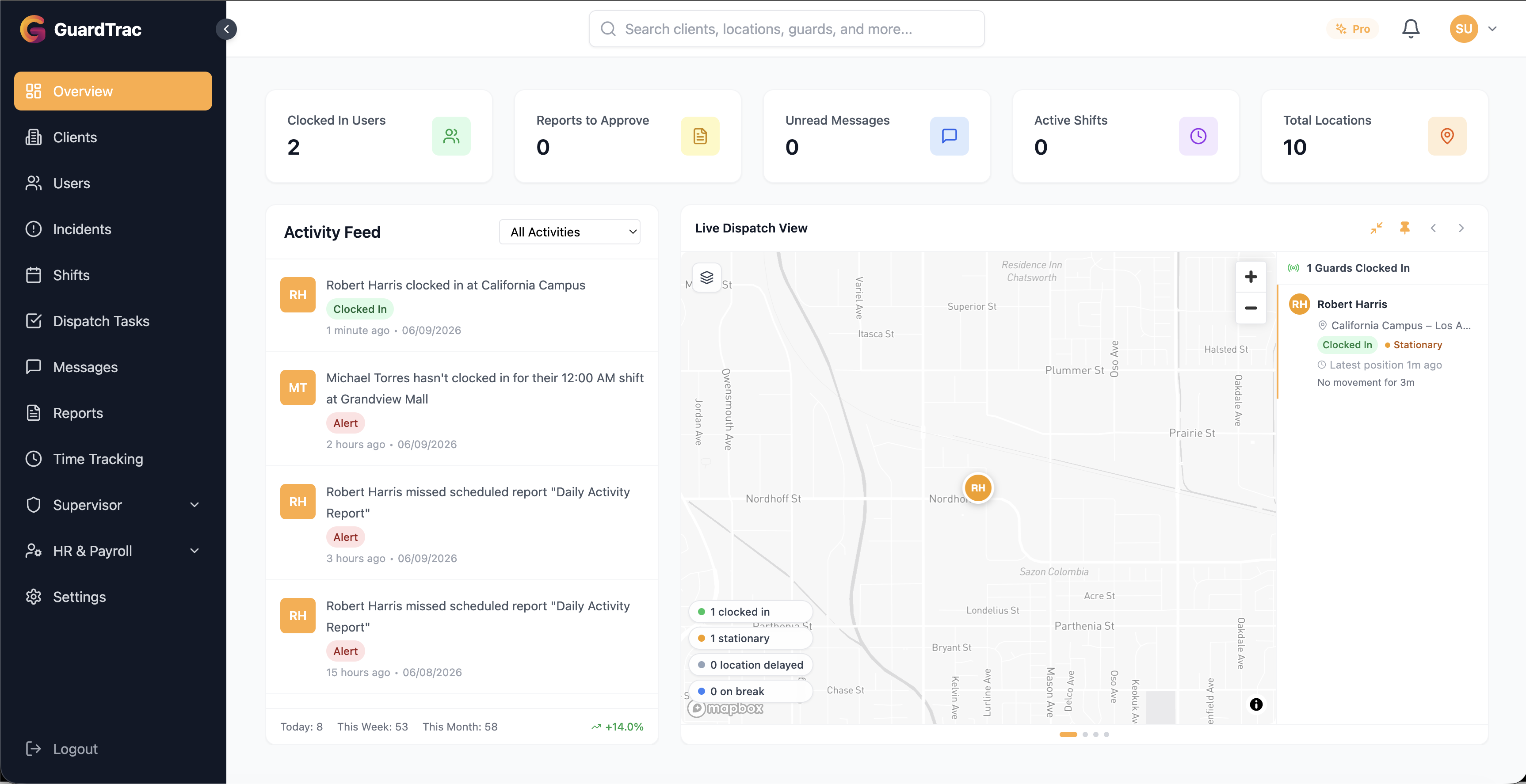
- Lead with accountability. New companies win against established ones by offering transparency the incumbent doesn’t — real-time tracking, verifiable patrol reports, and responsive communication.
That last point is your edge. Many established firms still run on paper. If you can show a prospect exactly when and where their site will be patrolled, you look more professional than competitors twice your size.
Step 7: Set Up Your Operations Systems
This is where new owners most often underinvest — and it’s what separates a company that scales from one that drowns in admin. From your very first guard, you need a reliable way to:
- Track where guards are and verify they’re on-site
- Schedule shifts and catch conflicts before they cause no-shows
- Verify patrols with checkpoint scans
- Capture incident reports with photos, time, and location
- Produce client-ready reports that prove the work was done
You can stitch this together with spreadsheets and texts at first, but it breaks down fast — usually right when you land the growth that should be good news. Security guard management software consolidates all of it into one system, and modern per-guard pricing makes it affordable even at one or two guards.
Frequently Asked Questions
How much does it cost to start a security guard company? Startup costs vary widely by location, but the main expenses are licensing, insurance and bonding, uniforms and equipment, and basic software. It’s a relatively low-capital business to start compared to most — your biggest investments are time and getting licensed.
Do I need a license to start a security company? In nearly all jurisdictions, yes — both a company license and individual guard licensing. Requirements differ by region, so confirm with your local security regulator before operating.
How do security companies make money? By billing clients an hourly rate per guard that exceeds the cost of providing that guard (wages, insurance, overhead). Profitability depends on disciplined pricing and keeping operations efficient.
How do I get my first security contract? Network locally with the businesses that buy security — property managers, construction firms, event venues — and differentiate on accountability and transparency that older, paper-based competitors can’t match.
The Bottom Line
Starting a security guard company is achievable, but lasting success comes from professionalism: get licensed and insured properly, price for real margin, hire and keep good guards, and run operations on systems that prove your value to clients. Get those right and you’ll compete with firms far larger than you.
Building your security company? Start a free 21-day trial of GuardTrac to run tracking, scheduling, and reporting from day one — no credit card required — or contact our team to learn more.
Ready to try GuardTrac?
Start your free 21-day trial today. No credit card required.
Start Free Trial